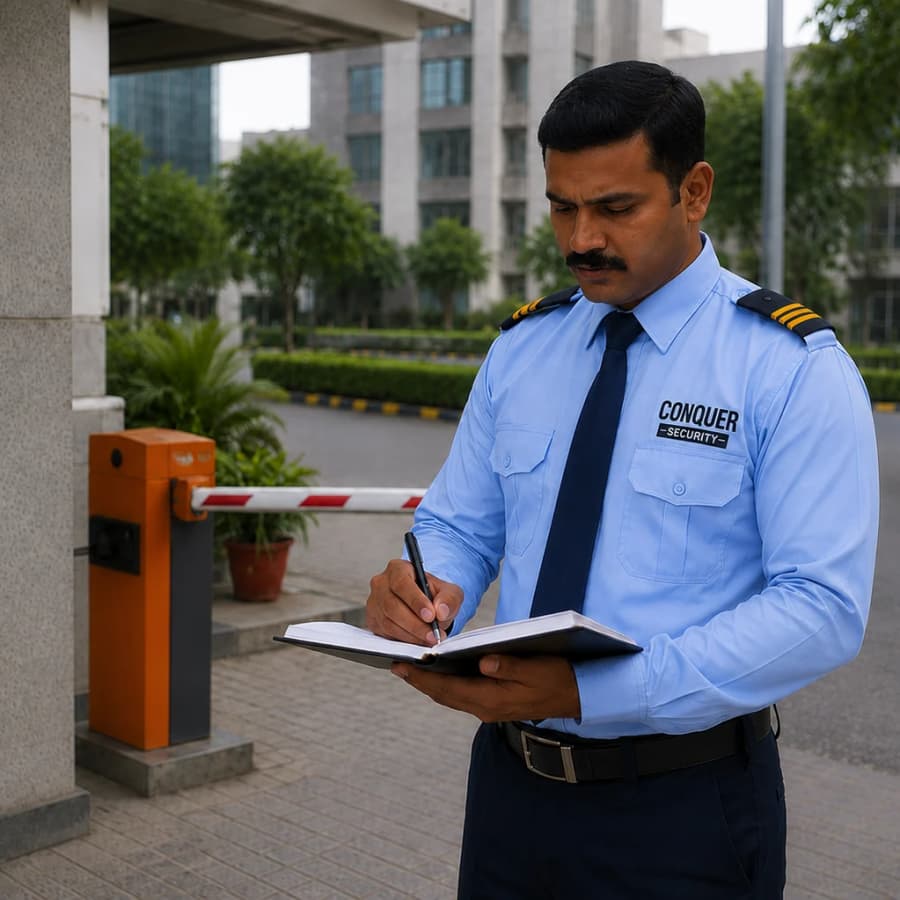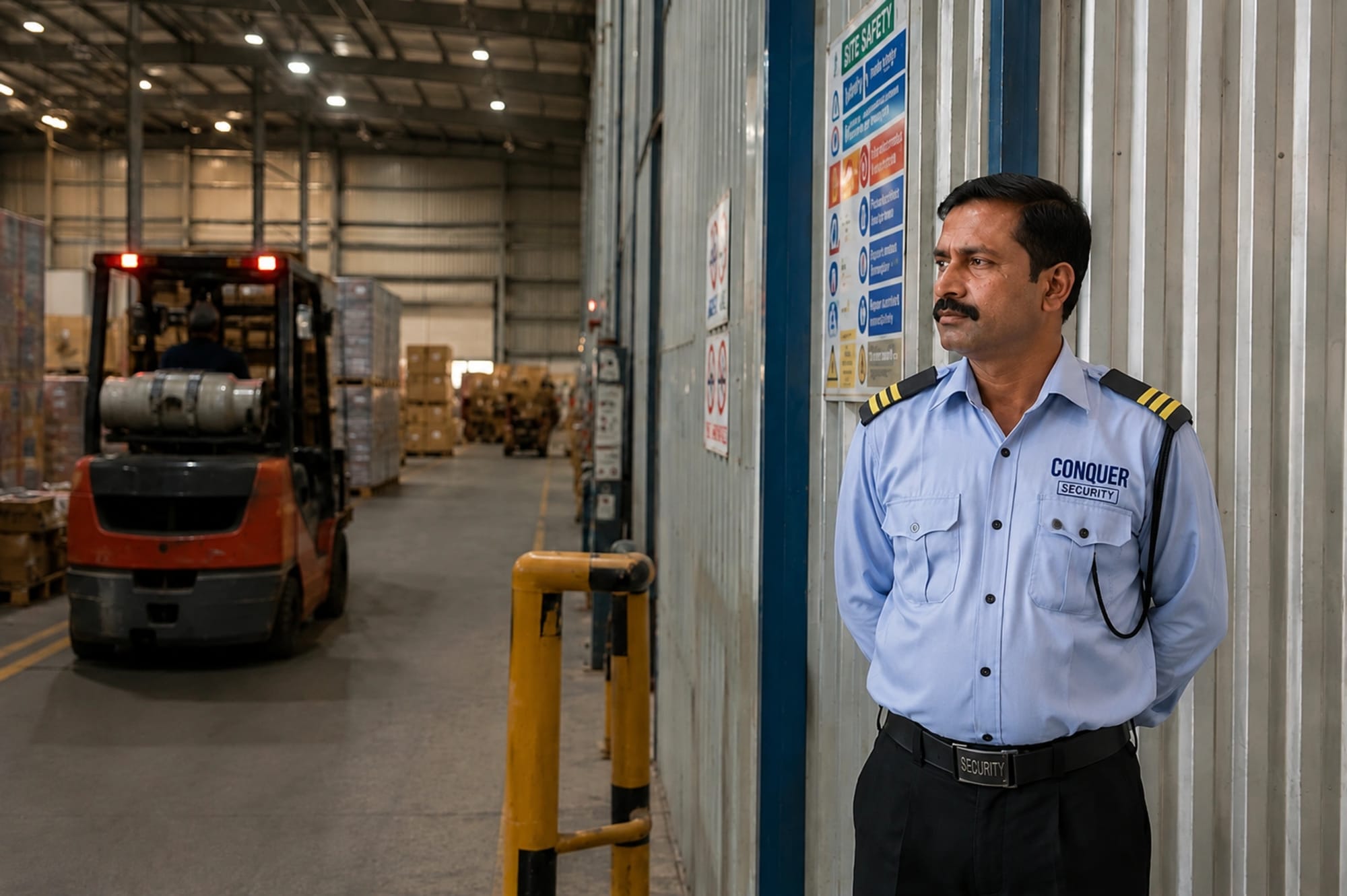
Conquer Services deploys trained and verified guards at warehouses, cold storage units and distribution hubs. Our teams protect your stock, control every vehicle and person that enters, and keep your dispatch schedule running without delays.
A warehouse is never quiet for long. Trucks arrive at all hours, contract labour shifts, and high-value goods move through the gate every day. That combination makes storage and logistics sites some of the hardest properties to secure.
Our warehouse security guard services are designed around this pace. Before a guard reports to your site, we brief them on your gate pass system, material movement process, shift timings and emergency plan. They start work knowing how your facility runs, so security supports your operations instead of slowing them down.

Industrial warehouse security fails in predictable places. We plan for these nine risks at every site.
Most losses happen during loading, unloading and shift changes, when attention is split. Guards keep a visible presence at these moments and check what leaves the premises.
Storage zones, loading bays and stock rooms need controlled access. Guards stop unverified people at the point of entry, before they reach your inventory.
Trucks, tempos and delivery vans come and go all day. Without a proper record, no one can say who brought what in or took what out.
Goods that move without a challan or gate pass are a loss waiting to be discovered later. Guards verify documents against the consignment every time.
Stocked warehouses sitting idle overnight attract intruders. Night rounds and gate discipline close that window.
A fire, an accident or a break-in needs someone trained to act in the first few minutes. Without that person on site, small incidents become large ones.
Daily-wage and contract workers move across zones in large numbers. Without a logged entry system, no one knows who was where.
Packaging material, electrical loads and tightly packed racks raise the fire risk. Guards watch for hazards and enforce site safety rules.
Auditors, vendors and clients who enter without registration or an escort create both security and liability gaps.
Our deployment model covers eight layers of protection. Each one has a clear owner on the ground.
Guards control all vehicle and pedestrian entry, checking identity, vehicle details and gate passes.
Every visitor and vendor is registered with ID and purpose before being escorted to the right zone.
Guards follow set patrol routes with checkpoints, so every corner of the site is covered on a fixed schedule.
Guards and camera operators work together, so what the cameras see is acted on by someone on the ground.
Restricted zones stay restricted. Guards enforce who can enter storage areas, control rooms and office sections.
Guards know the escalation chain and act first during fire, theft or accident, then hand over to management and emergency services.
Daily reports, gate registers and incident notes give your management clear records to review.
Supervisors visit the site at regular intervals to check attendance, alertness and log quality.
The right team depends on your gates, floor area, cargo value and shift pattern. This is a starting point for planning. We confirm the final strength after a site assessment.
1 to 2 guards covering day and night shifts.
2 to 6 guards with a shift supervisor.
A larger guard team with a dedicated supervisor and CCTV support.
A layered team of guards, armed guards where required, a supervisor, CCTV and a quick response team.

Manage all entry and exit points, and check driver identity, vehicle registration and gate passes before anyone is allowed through.
Record every inbound and outbound vehicle with driver details, vehicle number and consignment reference.
Match each consignment against its delivery challan or gate pass to stop unauthorised removal of goods.
Track daily-wage workers, contract staff and temporary labour across every shift.
Register vendors, auditors and clients with ID and purpose, then escort them to the correct zone.
Walk racks, bays and floor areas at regular intervals to deter theft and watch stock access.
Patrol the perimeter, loading docks and parking areas through the night to prevent intrusion.
Watch for fire hazards, enforce no-smoking areas and act as first responders in an emergency.
Alert management, supervisors and emergency services immediately during accidents, theft or breaches.
Keep unauthorised people away from high-value storage, server rooms and management areas.
Keep gate registers, movement records and incident reports accurate and ready for review.
Complete a written handover at every shift change so nothing is lost between teams.
As a licensed logistics security company, we operate under the Private Security Agencies (Regulation) Act, and every guard we deploy meets its requirements. Each guard goes through identity checks, address and background verification, and site-specific training before deployment. We also maintain wage, provident fund and insurance compliance for our staff, which protects you from contractor-related liability.
You receive documented records for guard verification and attendance on request, so your audit and insurance requirements are covered.
Our team visits the warehouse, walks the gates, docks and storage zones, and identifies the theft, access and fire risks specific to your operation.
We decide guard strength, shift timings, patrol routes and supervision based on what we found, and share the plan with you for approval.
We select verified guards suited to your site type and brief them on your gate procedures, material movement rules and emergency plan.
Guards take charge in coordination with your team, with registers and reporting formats set up from the first shift.
Supervisors inspect the site regularly, and we review incident reports with you to adjust the deployment as your operations change.
Warehouse guarding works best alongside other security layers. Depending on your site, we can add any of the following.

Daily gate, patrol and access control duties.

Added protection for high-value stock and cash-related movement.

Suited to sites with women staff, packing units and mixed workforces.
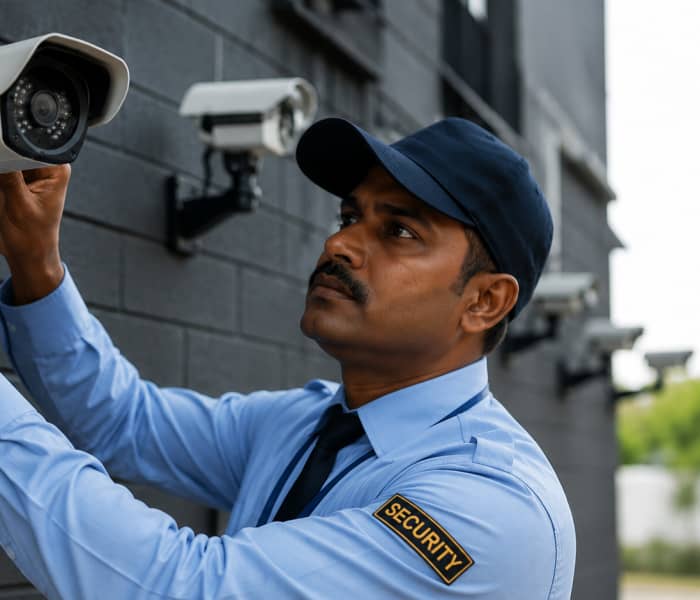
Live camera monitoring linked with on-site guards.
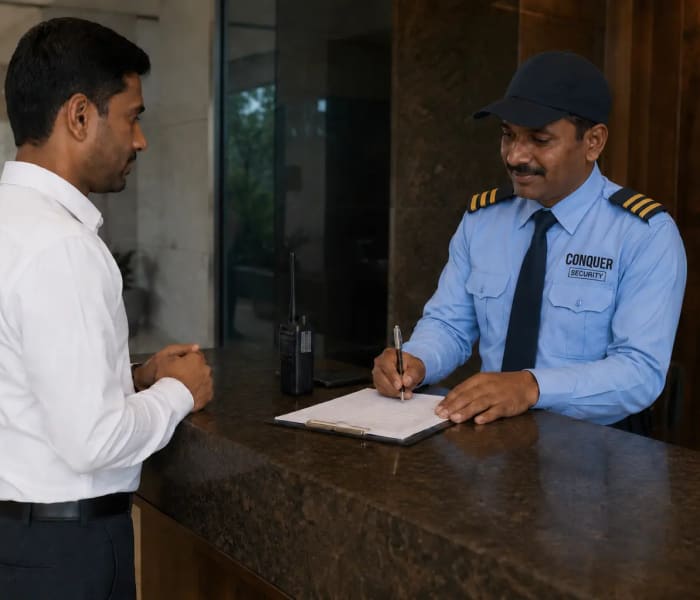
Structured registration and tracking of visitors and vendors.
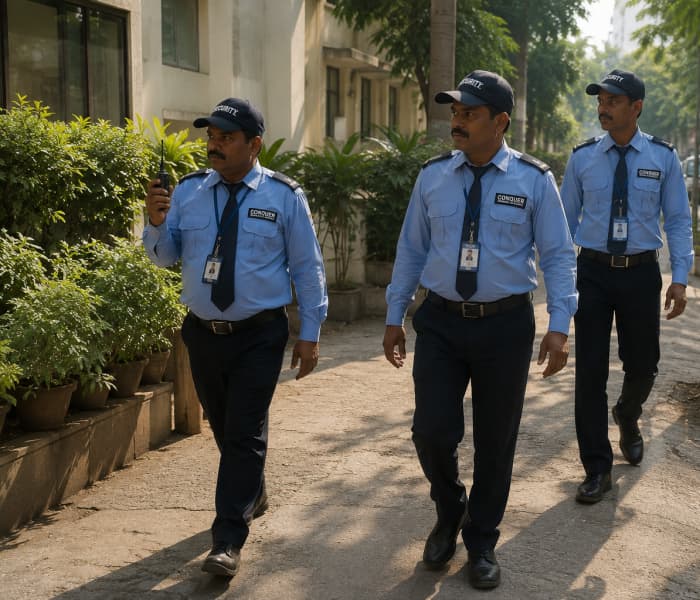
Mobile patrols and a quick response team for larger sites.
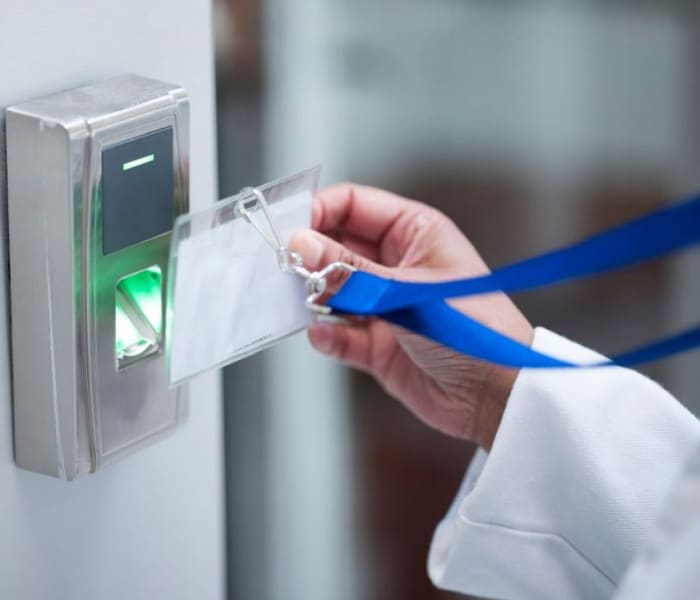
Technology support for controlled entry to restricted zones.

Trained staff for fire prevention and first response.
Gate duty is only one part. Guards also log vehicles and workers, verify material against challans, patrol storage zones, watch for fire hazards and respond to incidents. At larger sites they also work with CCTV operators and supervisors, so security covers the whole facility and not just the entrance.
It depends on the number of gates and loading docks, the floor area, the value and type of stock, and how many shifts you run. A site with heavy truck movement or high-value cargo needs more coverage than one with occasional dispatches. We confirm the count after a site visit rather than quoting a fixed number.
They check the vehicle and driver at entry, match the consignment against the challan, and stay present at the dock while goods move. Every entry and exit is written in the register, which creates a clear record if a shortage is reported later. The visible presence itself also discourages pilferage.
Logistics security services focus on movement, not just presence. The main concerns are vehicle tracking, consignment verification, dock control and night-time protection of stocked goods. Guards are trained on these procedures, and supervisors review the records, which a general residential or office guard is not prepared for.
Guards should come from a PSARA-licensed agency and carry completed identity and background verification. The agency should also handle wages, provident fund and insurance for its staff. We keep these records available for your audits and can share them on request.
Spot risks in material movement, access control and night security before they turn into losses.
Get a free site assessment and a security deployment plan built around your facility.